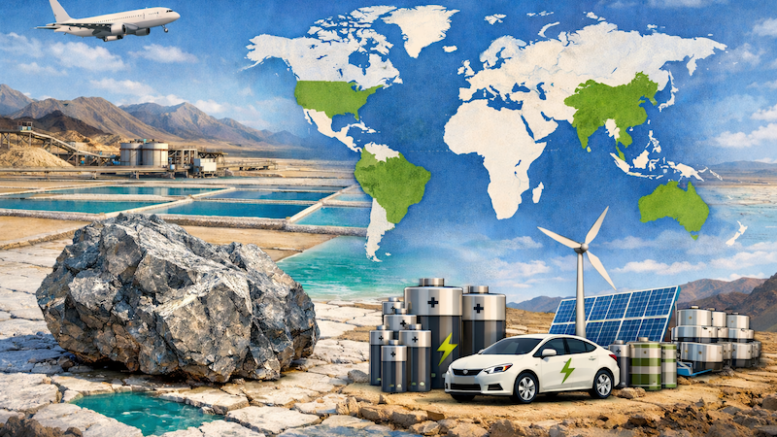
Lithium is set to be a critical mineral as the world develops new technology in wind power and electric vehicles gain ground
Read more: Managing the world’s lithium reservesAs the global economy accelerates toward electrification and renewable energy adoption, lithium has emerged as a key raw material.
Major lithium reserves are geographically concentrated, with Bolivia holding among the largest known deposits globally, primarily beneath the Salar de Uyuni salt flat. Argentina and Chile, together with Bolivia, form the South American “Lithium Triangle,” a region containing a substantial portion of identified lithium resources. These countries represent key strategic interests for global supply planning. The USA, Australia, and China also hold significant lithium reserves.
Australia also combines sizeable reserves with advanced hard-rock mining capabilities, while Chile continues to develop brine-based extraction projects.
Lithium mining can impose significant environmental impacts, including water resource pressures and land disturbance. Leading companies are investing in advanced technologies such as direct lithium extraction (DLE) and battery recycling to improve recovery rates.
As end-of-life battery volumes grow, recycling infrastructure can recover lithium and other critical elements, providing a stabilising influence on supply and reducing exposure to mining volatility.
Demand for lithium in China is soaring with the country leading the world in lithium processing. On the exploration side Mali, Zimbabwe and closer to home, Cornwall are cited as possible sources for future lithium extraction.
Be the first to comment on "Managing the world’s lithium reserves"