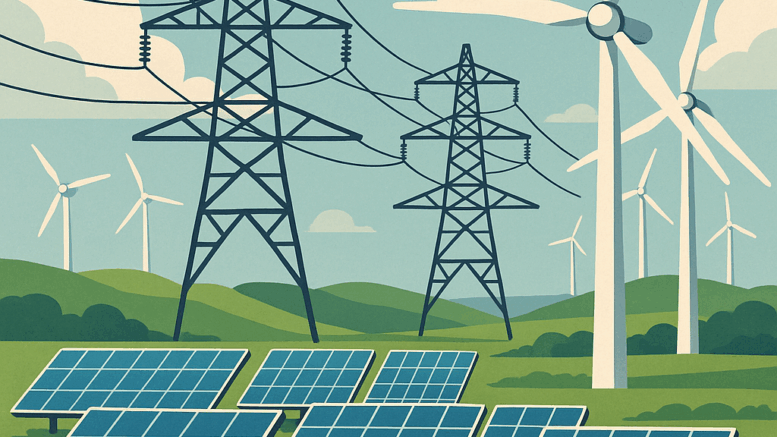
This challenge is one that can be overcome with the right strategic planning
Read more: Adding capacity to the UK’s gridThe UK’s transition to a low-carbon economy depends heavily on adding renewable capacity to the National Grid, which is undergoing its most significant transformation since its creation.
The government’s ambition to deploy 50 GW of offshore wind by 2030, alongside rapid growth in solar installations and community-scale renewables, will require extensive upgrades to transmission and distribution infrastructure.
Much of the existing network was designed for large, centralised fossil-fuel plants, not the distributed and variable generation that characterises renewables. To address this, the National Grid is investing in new high-voltage transmission lines, subsea cables, and interconnectors that link renewable-rich regions such as Scotland and the North Sea to major demand centres in England.
Energy storage, including large-scale batteries and pumped hydro, plays a crucial role by smoothing variability and providing rapid response during periods of low generation.
Demand-side response and local energy systems are also emerging as vital tools to make better use of renewable electricity without overloading the network.
Policy reforms from Ofgem and the Department for Energy Security and Net Zero are streamlining planning approvals and promoting anticipatory investment, encouraging the grid to build capacity ahead of demand rather than in reaction to bottlenecks.
Ultimately, expanding the UK’s grid capacity for renewables is not just about infrastructure—it is about enabling a flexible, resilient, and decarbonised energy system that can power homes, transport, and industry.